
US Treasury yields retreat as Iran deal hopes pull WTI lower
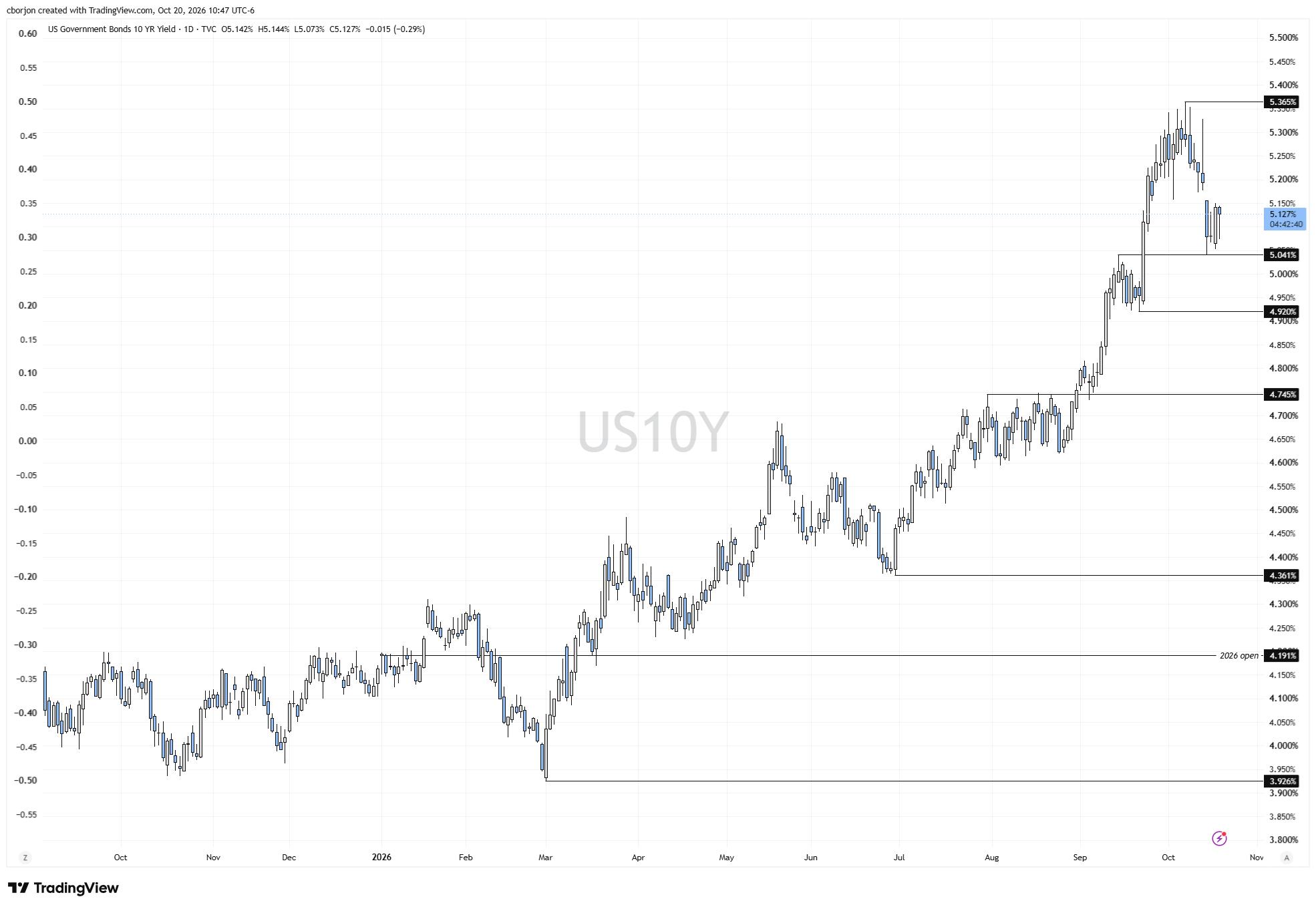
- US 10-year Treasury yield falls nearly two basis points to 5.123%.
- WTI declines to $97.58 amid conflicting reports about US-Iran negotiations.
- Pending Home Sales plunge 7.3% as rising mortgage rates hurt demand.
US Treasury yields edged lower on Tuesday, following news that Washington and Tehran may be nearing a deal, while another report said that US-Iran talks are ongoing and that a deal is not yet finished.
US 10-year yields ease toward 5.12% as diplomatic optimism and weak housing data weigh
US bond yields edged lower, weighed by the recovery of the US equity market. The US benchmark note, the 10-year Treasury yield, dives nearly 2 basis points to 5.123%, initially dragged lower by geopolitical news that pushed energy prices lower. West Texas Intermediate (WTI), the US crude Oil benchmark, loses 0.67% at $97.58 per barrel.
The US Dollar Index (DXY), which measures the buck’s performance against a basket of its peers, is down 0.32% at 101.66.
US Pending Home Sales in September tumbled -7.3%, below estimates of -0.5%, blamed on rising mortgage rates. Looking ahead, the US economic docket will feature the release of Initial Jobless Claims data on October 22, followed by S&P Global Flash PMIs on October 23.
The US 2-year Treasury yield, which is the most sensitive to interest rate expectations, is flat at 4.789%.
Money markets priced in the Federal Reserve holding interest rates at its October meeting. However, for the December meeting, it remains at 89%, according to Prime Terminal.
US 10-year Treasury note yield chart – Daily
Interest rates FAQs
Interest rates are charged by financial institutions on loans to borrowers and are paid as interest to savers and depositors. They are influenced by base lending rates, which are set by central banks in response to changes in the economy. Central banks normally have a mandate to ensure price stability, which in most cases means targeting a core inflation rate of around 2%. If inflation falls below target the central bank may cut base lending rates, with a view to stimulating lending and boosting the economy. If inflation rises substantially above 2% it normally results in the central bank raising base lending rates in an attempt to lower inflation.
Higher interest rates generally help strengthen a country’s currency as they make it a more attractive place for global investors to park their money.
Higher interest rates overall weigh on the price of Gold because they increase the opportunity cost of holding Gold instead of investing in an interest-bearing asset or placing cash in the bank. If interest rates are high that usually pushes up the price of the US Dollar (USD), and since Gold is priced in Dollars, this has the effect of lowering the price of Gold.
The Fed funds rate is the overnight rate at which US banks lend to each other. It is the oft-quoted headline rate set by the Federal Reserve at its FOMC meetings. It is set as a range, for example 4.75%-5.00%, though the upper limit (in that case 5.00%) is the quoted figure. Market expectations for future Fed funds rate are tracked by the CME FedWatch tool, which shapes how many financial markets behave in anticipation of future Federal Reserve monetary policy decisions.